5 Industries That Rely on Aluminum Disc — and Why They Choose It Over Other Materials
Every time you cook on a flat-bottomed pan, drive past a road sign, or turn on an LED lamp, there is a very good chance an aluminum disc is doing its job quietly behind the scenes.
Aluminum discs — also called aluminum circles or aluminum round blanks — are one of the most widely used semi-finished metal products in global manufacturing. Yet most buyers outside the metalworking industry have never given them a second thought.
This post takes a look at five major industries that depend on aluminum disc as a core raw material, explains why aluminum beats competing materials in each case, and answers the questions engineers and procurement teams ask most often.


What Exactly Is an Aluminum Disc?
Before diving into applications, a quick definition for new readers.
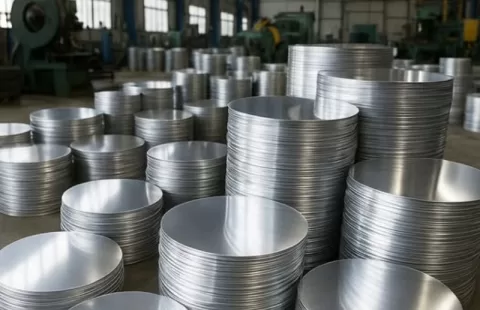
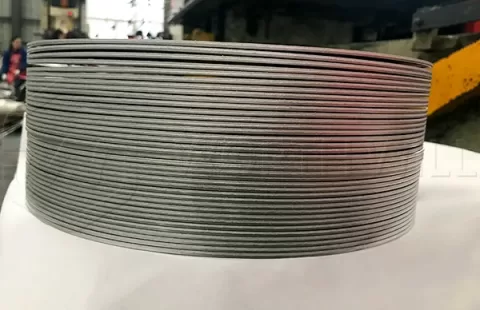
An aluminum disc (also written as aluminium disc in British English) is a flat, circular blank cut or stamped from an aluminum alloy sheet or coil. It has no hole in the center unless specified. It is supplied in a range of diameters, thicknesses, alloys, and surface finishes.
The terms aluminum disc, aluminum circle, aluminum round blank, and aluminum circle plate all refer to the same product category. “Aluminum circle” is the standard factory term. “Aluminum disc” is what most English-speaking engineers and buyers search for online.
Industry 1: Cookware Manufacturing
Why the cookware industry runs on aluminum circles
Ask any cookware manufacturer what their single most important raw material is, and the answer is almost always the aluminum disc for cookware — specifically the 1050 or 1060 aluminum disc in O (fully annealed) temper.
Here is why aluminum dominates cookware production over stainless steel, cast iron, and copper:
| Material | Weight | Heat Distribution | Cost | Formability |
|---|---|---|---|---|
| Aluminum (1050/1060) | Very light | Excellent | Low | Excellent |
| Stainless steel | Heavy | Poor (uneven) | Moderate | Moderate |
| Cast iron | Very heavy | Moderate | Low | Poor |
| Copper | Moderate | Best | Very high | Good |
Aluminum wins on three of the four most important criteria for cookware. The only area where it trails is copper on heat distribution, but the cost premium for copper is prohibitive at scale.
What specs does the cookware industry use?
Deep drawing and metal spinning are the two dominant production processes. Both require an aluminium disc for cookware that is soft enough to deform without cracking, and pure enough to maintain food-safety standards.
Typical cookware disc specifications:
| Parameter | Specification |
|---|---|
| Alloy | 1050-O, 1060-O, 1100-O, 3003-O |
| Thickness | 1.5 mm – 4.0 mm |
| Diameter | 100 mm – 600 mm |
| Temper | O (annealed) — critical |
| Surface | Mill finish (inner), bright finish (outer) |
| Certification | FDA / LFGB food contact compliant |
The 3003 aluminum disc is used where more strength is needed — for pressure cooker bodies and lids, for example. 3003 is a manganese-bearing alloy that retains most of 1060’s formability while offering roughly 20–30% higher strength.
What buyers ask most
A frequent question from cookware manufacturers: “Can I use H14 temper to save cost?”
The answer is no. An aluminum disc in H14 (half-hard) temper will crack during deep drawing. The O temper requirement is non-negotiable for deep drawn parts. Any cost saving on temper is immediately wiped out by scrap and rework.
Industry 2: Road Signs and Traffic Management
The aluminum disc as a sign blank
Every road sign starts as a flat metal blank. For circular signs — stop signs, speed limit discs, warning signs, parking restriction signs — that blank is a round aluminum disc cut to the required diameter.
The shift from steel to aluminum for road signs happened globally over the 1980s and 1990s. The reasons were straightforward: aluminum does not rust, weighs less than a third of steel, and maintains its structural integrity for 20–30 years of outdoor exposure without painting or galvanizing.
A typical highway sign blank spec:
| Parameter | Specification |
|---|---|
| Alloy | 5052-H32 or 1060-H14 |
| Thickness | 2.0 mm – 4.0 mm |
| Diameter | 200 mm – 900 mm |
| Surface | Mill finish or pre-painted |
| Flatness | ≤ 1.5 mm per 1,000 mm |
| Edge | Deburred, safe for handling |
5052-H32 is the preferred alloy for premium sign applications due to its excellent corrosion resistance and higher strength. It performs especially well in coastal areas, where salt air would degrade lower-grade materials.
1060-H14 is used for cost-sensitive standard signs where the corrosion environment is mild.
The 24 aluminum disc (24 inches, ~609 mm) is a common size for large regulatory signs. The 12 inch aluminum disc (304.8 mm) is widely used for speed limit and parking signs.
Industry 3: LED Lighting and Solar Reflectors
Why lighting engineers specify aluminum circles
Light reflectors must do two things well: reflect as much light as possible, and resist heat degradation over thousands of hours of operation. Aluminum does both better than any other affordable material.
The reflectivity of pure aluminum (1050, 1060 alloy) in mill finish condition is approximately 80–85%. With mirror polishing, it reaches 92–95%. With specialized bright anodizing, some grades achieve over 95% total reflectivity — comparable to silver mirrors but at a fraction of the cost.
LED downlights, street lights, solar parabolic reflectors, and horticultural grow lights all use aluminum disc or aluminum circle blanks as the starting material for their reflector assemblies.
Typical lighting-grade aluminum disc specs:
| Parameter | Specification |
|---|---|
| Alloy | 1050-H18, 1060-H18 |
| Thickness | 0.5 mm – 2.0 mm |
| Reflectivity | ≥ 86% (mill finish), ≥ 92% (mirror) |
| Surface | Mirror polished / bright anodized |
| Diameter | 50 mm – 500 mm |
| Flatness | Critical — affects beam pattern |
The LED PCB plate aluminum disc is a related product: a thicker aluminum base disc used as the heat-spreading substrate for LED circuit boards. This application uses 1060 or 3003 alloy for thermal conductivity, with a flat, smooth surface for laminating the circuit layer.
Solar reflectors
Large parabolic solar concentrators use curved aluminum reflector panels. The production process starts with a flat aluminum circle that is then stamped or spun into a parabolic dish shape. The same 1050/1060-H18 mirror-finish disc used in lighting is the standard starting material.
Industry 4: Dye Sublimation and Personalized Products
The unexpected aluminum disc market
One of the fastest-growing uses for aluminum disc in recent years has nothing to do with heavy industry. The personalized gift and photo products market — custom keychains, wall art, medallions, awards plaques, and decorative ornaments — consumes large volumes of small aluminum discs every year.
The production process is called dye sublimation. A coated aluminum blank is placed in a heat press with a printed transfer paper. At around 190–200°C, the dye vaporizes and bonds permanently into the coating surface. The result is a photographic-quality, full-color image on a durable metal surface.
Dye sublimation blanks for this market are almost always made from 1100-O or 1050-O aluminum disc with a special white polyester coating pre-applied. The blank must be perfectly flat, free of surface defects, and the coating must be uniform to within ±0.02 mm.
Common sublimation disc specs:
| Parameter | Specification |
|---|---|
| Alloy | 1100-O, 1050-O |
| Thickness | 0.5 mm – 1.2 mm |
| Diameter | 25 mm – 150 mm |
| Surface | White sublimation coating |
| Flatness | Critical (≤ 0.3 mm) |
| Edge | Polished, burr-free |
A colored aluminum disc — pre-anodized in gold, black, silver, red, or blue before coating — is popular for premium award medallions and branded merchandise. The anodize layer under the sublimation coating adds depth and scratch resistance to the finished product.
Industry 5: Pressure Vessels, Capacitors, and Electronics
DC vs CC aluminum disc: what the electronics industry uses
Electronics and industrial equipment manufacturers use aluminum disc in two distinct ways.
DC aluminum disc (direct chill cast) starts from a cast aluminum ingot. The material has uniform grain structure, fewer inclusions, and better deep-drawing performance. DC aluminum circles are preferred for parts that undergo severe forming — capacitor shells, battery casings, and aerosol can bodies.
CC aluminum disc (continuous cast and rolled) starts from a continuous casting line. It is lower cost and suitable for less demanding applications — sign blanks, lighting reflectors, and shallow drawn cookware.
| Type | Production Method | Grain Structure | Deep Drawing | Cost |
|---|---|---|---|---|
| DC aluminum disc | Direct chill casting | Uniform, clean | Excellent | Higher |
| CC aluminum disc | Continuous casting | Some variation | Good | Lower |
For capacitor shells and electronic enclosures, the 1100 aluminum circle in O temper is the standard choice. 1100 alloy has the highest purity of all commercial aluminum alloys (~99.0% Al), offering minimum electrical resistance and maximum corrosion resistance in enclosed electronic environments.
For applications like pressure vessel heads and chemical processing equipment, the 3003 DC aluminum circle is preferred for its combination of formability and corrosion resistance.
Aluminum Disc vs. Aluminum Plate: A Practical Comparison
Many engineers ask whether they should source a custom-cut aluminum plate or an aluminum disc for their circular parts. Here is a practical breakdown:
| Consideration | Aluminum Disc | Aluminum Plate (cut to circle) |
|---|---|---|
| Unit cost | Lower (less material waste) | Higher (square blank waste) |
| Edge quality | Sheared or milled — clean | Waterjet or laser cut — variable |
| Lead time | Fast for standard sizes | Slower (custom cut each time) |
| MOQ | 500 kg (factory) | More flexible |
| Diameter range | 80 mm – 1,500 mm | Any |
| Thickness range | 0.3 mm – 10 mm | Up to 100+ mm |
| Best for | High-volume production | Prototypes, very thick parts |
For production runs above 500 kg, ordering stamped aluminum discs from a manufacturer is almost always cheaper and faster than ordering aluminum plate and paying a service center to cut circles.
How to Specify an Aluminum Disc Correctly
A complete specification prevents costly errors. Here is a template:
Material: Aluminum disc
Alloy: [1050 / 1060 / 1100 / 3003 / 5052 / 6061]
Temper: [O / H12 / H14 / H18 / T6]
Diameter: [mm] ± [tolerance mm]
Thickness: [mm] ± [tolerance mm]
Surface: [mill finish / mirror / anodized / sublimation coated]
Edge: [sheared / milled / deburred]
Standard: [ASTM B209 / EN 573-3]
Certification: [ISO 9001 / SGS / Food contact / REACH]
Quantity: [kg or pcs]
Packing: [interleaved with PE film / polybag per piece / pallet]
Providing all of these details upfront avoids back-and-forth and lets the supplier return an accurate quotation on the first attempt.
6 Mistakes Buyers Make When Ordering Aluminum Discs
Here are the most common ordering errors, based on real factory experience:
1. Specifying the wrong temper for forming Ordering H14 for deep-draw cookware. The discs arrive and crack on the first press stroke. Always specify O temper for deep drawing and spinning.
2. Forgetting to specify flatness For sign blanks and LED bases, flatness is critical. A disc with more than 2 mm of bow will cause problems in assembly. Always add a flatness requirement to the specification.
3. Neglecting edge condition Sheared edges have a small burr. For applications where workers handle discs frequently, or where the disc goes into a food contact product, a milled or deburred edge should be specified.
4. Confusing alloy 1050 and 1060 Both are excellent for cookware and lighting. 1050 has ≥99.5% aluminum content; 1060 has ≥99.6%. For most applications, they are interchangeable. However, some quality specifications in European markets call out 1050A specifically — verify before substituting.
5. Not requesting a material test report (MTR) The MTR confirms actual chemical composition and mechanical properties from the production batch. For food contact, medical, or structural applications, an MTR is not optional.
6. Ordering too close to the deadline Custom sizes need 20–35 days production time. Standard sizes are faster (7–15 days) but still need shipping time. Always build a buffer into your procurement timeline.
Manufacturer’s Perspective: What We Produce
We are a direct manufacturer of aluminum discs with full in-house production from cast rolling to finished blank. Our production covers:
| Category | Details |
|---|---|
| Alloy range | 1050, 1060, 1100, 3003, 5052, 6061, 8011 |
| Diameter range | 80 mm – 1,500 mm |
| Thickness range | 0.3 mm – 10 mm |
| Surface options | Mill finish, mirror, anodized, sublimation coated |
| Temper options | O, H12, H14, H18, H24, T6 |
| Production type | DC and CC aluminum circles |
| Certifications | ISO 9001, SGS, FDA/LFGB (cookware), REACH |
| Annual capacity | 50,000+ MT |
We export to more than 60 countries and have long-term supply agreements with cookware factories in Turkey, Iran, and Vietnam; sign manufacturers in the USA, Australia, and Germany; and lighting companies in South Korea, Japan, and the Netherlands.
Summary
The aluminum disc is one of those industrial materials that quietly enables a huge slice of modern manufacturing — from the pan you cook in every morning, to the stop sign at the end of your street, to the LED light above your desk.
Each industry has its own specification requirements. Cookware needs O-temper formability. Lighting needs mirror-grade reflectivity. Signs need flatness and corrosion resistance. Electronics need DC-cast purity. Sublimation products need coating consistency.
Matching the alloy, temper, and surface finish to the application is the difference between a disc that performs flawlessly and one that causes production problems downstream.
If you are sourcing aluminum disc for any of these applications, we are happy to review your specification and suggest the optimal material. Contact our technical team with your requirements and we will respond within 24 hours.