3003 DC Aluminum Disc
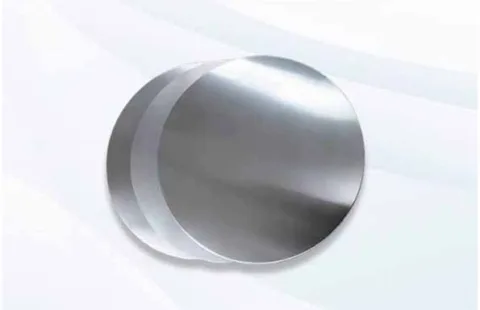
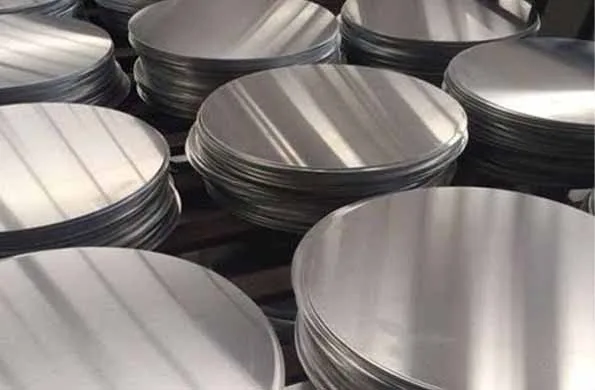
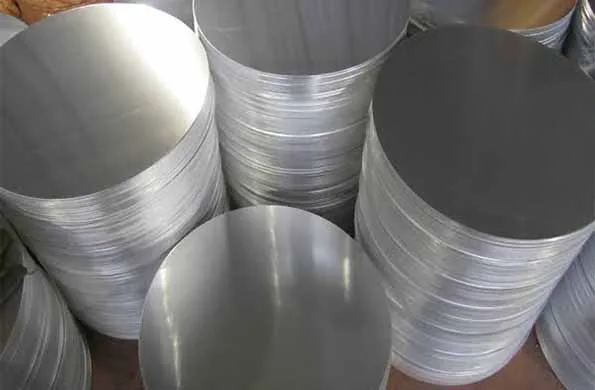
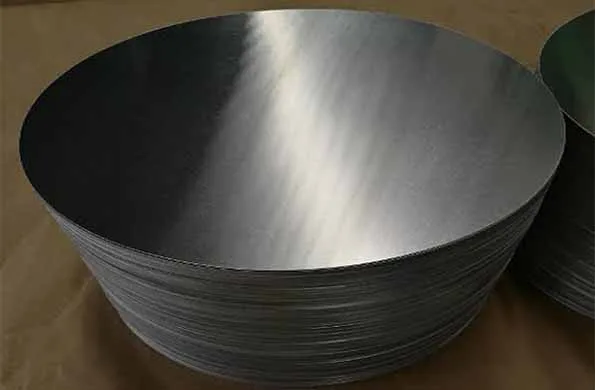
3003 DC aluminum disc is a high-quality round aluminum blank produced using the Direct Chill (DC) casting process. The “DC” in the name refers to the manufacturing method — Direct Chill casting — which produces aluminum ingots and slabs of superior metallurgical quality compared to continuous casting methods.
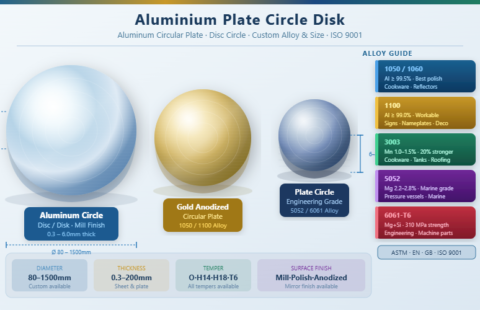
3003 aluminum belongs to the 3xxx series. Manganese (Mn) is the primary alloying element at 1.0–1.5%. This gives 3003 approximately 20% more strength than pure aluminum alloys like 1050 or 1100. At the same time, 3003 maintains excellent formability, corrosion resistance, and weldability.
The 3003 DC aluminum disc (also called 3003 aluminium disc or 3003 aluminum disk) is one of the most popular aluminum circle products in the world. Manufacturers use it as the starting material for cookware, lighting reflectors, road signs, chemical equipment, and dozens of other products.
This guide covers everything you need to know — from the DC casting process and alloy composition to mechanical properties, applications, and how to order.
What Is DC Casting in Aluminum Production?
Understanding the “DC” in 3003 DC aluminum disc helps you appreciate the quality advantage of this product.
Direct Chill (DC) Casting Process
Direct Chill casting is the standard production method for high-quality aluminum alloy ingots and rolling slabs. Here is how it works:
Step 1: Alloy Melting
Raw aluminum and alloying elements (Mn, Cu, Si, Fe) are melted together in a furnace. The composition is precisely controlled to meet 3003 alloy specifications.
Step 2: Degassing and Filtration
The molten aluminum is treated to remove dissolved hydrogen gas and solid inclusions. This is critical for producing clean, defect-free metal.
Step 3: Direct Chill Casting
The molten metal flows into a water-cooled mold. As it solidifies, water jets directly chill the outside of the forming ingot or slab. This rapid, controlled cooling produces a fine grain structure throughout the cross-section.
Step 4: Homogenization
The as-cast slab is heated to approximately 560°C and held for several hours. This makes the composition uniform throughout, eliminating segregation from casting.
Step 5: Hot Rolling
The homogenized slab is hot rolled to intermediate thickness. This refines the grain structure further.
Step 6: Cold Rolling
The hot-rolled strip is cold rolled to the final thickness with precise dimensional control.
Step 7: Annealing (for O temper)
For discs requiring O temper, the cold-rolled sheet is annealed to restore ductility for deep drawing.
Why DC Casting Produces Better Aluminum Discs
| Feature | DC Cast | Continuous Cast |
|---|---|---|
| Grain structure | Fine, uniform | Coarser |
| Segregation | Minimal | Higher |
| Homogeneity | Excellent | Moderate |
| Surface quality | Superior | Good |
| Formability | Excellent | Good |
| Anodizing quality | Superior | Good |
| Deep drawing | Best | Adequate |
DC cast 3003 aluminum discs have better formability, cleaner surfaces, and superior anodizing results compared to continuously cast material. For demanding cookware and precision applications, DC cast material is strongly preferred.
What Is 3003 Aluminum Used For?
3003 aluminum is one of the most versatile general-purpose aluminum alloys available. Here are its most important applications:
Cookware Manufacturing
The largest market for 3003 DC aluminum discs is cookware. Manufacturers deep draw round discs into:
- Frying pans and sauce pans
- Woks and stock pots
- Pressure cooker bodies and lids
- Rice cooker inner pots
- Baking trays and pizza pans
- Egg pans and specialty cookware
Why 3003 for cookware?
- Food safe — no harmful alloying elements
- Excellent deep drawability (especially in O temper)
- Good thermal conductivity (193 W/m·K)
- Stronger than 1050/1060 for same thickness
- Cost effective for mass production
Lighting and Reflectors
Polished 3003 aluminum discs serve as reflector blanks:
- LED light housings and reflectors
- Solar energy concentrators
- Spotlight components
- Architectural lighting fixtures
Road Signs and Traffic Management
3003 aluminum discs are the standard material for circular road signs:
- Speed limit signs
- Warning and hazard signs
- Prohibition signs
- Parking restriction signs
3003-H14 temper provides the right balance of stiffness and weight for outdoor signage.
Storage Tanks and Chemical Equipment
- Chemical storage tank components
- Fuel storage vessels
- Food and beverage processing tanks
- Pharmaceutical equipment
Roofing and Construction Panels
- Roofing sheets and wall cladding
- Ceiling tiles and panels
- Architectural decorative elements
Heat Exchangers
- Automotive radiator components
- HVAC systems
- Industrial cooling equipment
3003 Aluminum Data Sheet
Chemical Composition of 3003 Aluminum
| Element | Content (%) |
|---|---|
| Aluminum (Al) | Balance (~98%) |
| Manganese (Mn) | 1.00 – 1.50 |
| Copper (Cu) | 0.05 – 0.20 |
| Silicon (Si) | ≤ 0.60 |
| Iron (Fe) | ≤ 0.70 |
| Zinc (Zn) | ≤ 0.10 |
| Other elements | ≤ 0.05 each |
Mechanical Properties of 3003 Aluminum Disc
| Temper | Tensile Strength | Yield Strength | Elongation | Hardness |
|---|---|---|---|---|
| 3003-O | 110 MPa | 41 MPa | 25% | 28 HB |
| 3003-H12 | 131 MPa | 124 MPa | 10% | 35 HB |
| 3003-H14 | 150 MPa | 145 MPa | 8% | 40 HB |
| 3003-H16 | 180 MPa | 170 MPa | 5% | 47 HB |
| 3003-H18 | 200 MPa | 185 MPa | 4% | 55 HB |
Physical Properties of 3003 Aluminum
| Property | Value |
|---|---|
| Density | 2.73 g/cm³ |
| Melting Range | 643 – 654°C |
| Thermal Conductivity | 193 W/(m·K) |
| Electrical Conductivity | 41% IACS |
| Coefficient of Thermal Expansion | 23.2 µm/m·°C |
| Elastic Modulus | 68.9 GPa |
| Specific Heat Capacity | 893 J/(kg·K) |
International Equivalent Standards
| Standard | Designation |
|---|---|
| USA (AA/ASTM) | 3003 |
| Europe (EN) | EN AW-3003 / Al Mn1Cu |
| Germany (DIN) | AlMn1Cu |
| Japan (JIS) | A3003 |
| China (GB) | 3003 |
| ISO | AlMn1Cu |
Is 3003 Aluminum Strong?
This is a common question from buyers comparing 3003 aluminum with other alloys.
3003 aluminum has moderate strength. It is not a high-strength structural alloy. However, it is significantly stronger than pure aluminum alloys:
Strength Comparison
| Alloy | Tensile (H14/T6) | Relative Strength |
|---|---|---|
| 1050-H14 | 100 MPa | Low |
| 1060-H14 | 110 MPa | Low |
| 1100-H14 | 125 MPa | Low |
| 3003-H14 | 150 MPa | Medium |
| 5052-H32 | 228 MPa | Medium-High |
| 6061-T6 | 310 MPa | High |
3003 is about 20% stronger than 1100 in the same temper. The manganese content provides solid solution strengthening without significantly reducing formability.
Where 3003 Strength Works Well
- Cookware walls that need to hold shape during use
- Road signs that resist wind loads
- Storage tanks under moderate pressure
- Roofing panels resisting foot traffic and wind
Where 3003 Is Not Strong Enough
- Structural load-bearing components
- Aerospace structural parts
- High-pressure vessels
- Precision engineered machine parts
For structural applications, choose 5052 or 6061. For maximum formability at lower cost, choose 1050 or 1060.
Can You Anodize 3003 Aluminum?
Yes. 3003 aluminum can be anodized. However, there are some important points to understand:
Anodizing 3003 Aluminum Discs
Standard Anodizing (Type II)
3003 anodizes well with standard sulfuric acid anodizing. The anodized layer provides good corrosion protection and can be colored.
Appearance Considerations
The manganese content in 3003 means the anodized finish is not as clear or bright as high-purity alloys like 1050 or 1060. The surface may appear slightly gray or hazy compared to purer alloys.
Hard Anodizing (Type III)
3003 can also be hard anodized. This produces a very durable, wear-resistant surface coating up to 75 microns thick.
Color Options for Anodized 3003 Aluminum Discs
- Clear / natural silver
- Black (most popular)
- Gold / champagne
- Blue
- Red / bronze
- Custom colors on request
When to Choose 3003 vs 1050 for Anodizing
| Requirement | Best Alloy |
|---|---|
| Clearest, brightest anodized finish | 1050 or 1060 |
| Good anodized finish + more strength | 3003 |
| Colored anodize for decorative use | 3003 or 1050 |
| Hard anodize for wear resistance | 3003 |
If the highest quality clear anodized finish is your priority, choose 1050 or 1060 aluminum discs. If you need the anodized surface for protection and color with some strength advantage, 3003 is a good choice.
Can You Weld 3003 Aluminum to 6061 Aluminum?
Yes. 3003 aluminum can be welded to 6061 aluminum. However, there are important practical considerations:
Welding 3003 to 6061: Method
MIG Welding (GMAW)
Use 4043 filler wire for welding 3003 to 6061. This is the most common approach and produces good results.
TIG Welding (GTAW)
Use 4043 or 5356 filler wire. TIG welding gives better control and a cleaner weld bead. Preferred for precision applications.
Important Considerations
Strength Mismatch
3003-H14 has a tensile strength of 150 MPa. 6061-T6 has 310 MPa. Welding these two alloys together creates a joint where the 3003 side is the weaker material. The weld zone will have strength closer to the weaker alloy (3003).
Heat Affected Zone (HAZ)
Both alloys lose strength in the heat-affected zone during welding. 6061-T6 loses more strength than 3003 because its heat treatment (T6 temper) is partially reversed by welding heat.
Post-Weld Treatment
For 6061, post-weld heat treatment (artificial aging) can partially restore strength. For 3003, no heat treatment is effective for strength restoration.
Corrosion at the Joint
Dissimilar aluminum alloys in contact can create galvanic corrosion in some environments. In most indoor and mild outdoor environments, 3003-to-6061 joints perform well. For marine or highly corrosive environments, consider additional sealing or coating.
Practical Applications of 3003-to-6061 Welds
- Cookware with 3003 body and 6061 handle attachment
- Storage tank bodies (3003) with structural frame (6061)
- Fabricated assemblies combining formability and strength
3003 DC Aluminum Disc Specifications
Standard Dimensions
Diameter Range:
- Minimum: 80mm
- Maximum: 1500mm
- Most popular: 200mm, 250mm, 300mm, 350mm, 400mm, 450mm, 500mm
Thickness Range:
- Sheet-based discs: 0.3mm – 6.0mm
- Plate-based discs: 6.0mm – 200mm
- Most popular for cookware: 1.0mm – 3.0mm
Temper Options:
- O (Annealed) — Best for deep drawing cookware
- H12 — Quarter hard, moderate forming
- H14 — Half hard, signs, panels, general use
- H16 — Three-quarter hard
- H18 — Full hard, maximum strength
- H22/H24 — Strain hardened and partially annealed
Surface Finish Options:
- Mill finish — natural, most economical
- Polished — bright, brushed, or mirror
- Anodized — clear or colored
- Non-stick coated — for cookware (applied post-forming)
Weight Reference (3003 Aluminum Discs)
| Diameter | Thickness | Weight per Piece |
|---|---|---|
| 200mm | 1.5mm | 129g |
| 300mm | 1.5mm | 290g |
| 400mm | 2.0mm | 687g |
| 500mm | 2.0mm | 1,074g |
| 600mm | 3.0mm | 2,323g |
Calculated using density 2.73 g/cm³
3003 DC Aluminum Disc vs Other Alloy Discs
3003 vs 1050 Aluminum Disc
| Feature | 3003 DC Disc | 1050 Disc |
|---|---|---|
| Strength (H14) | 150 MPa | 100 MPa |
| Formability | Excellent | Excellent |
| Thermal conductivity | 193 W/m·K | 222 W/m·K |
| Anodizing quality | Good | Excellent |
| Food safety | Yes | Yes |
| Cost | Similar | Similar |
| Best for | Cookware needing more strength | Reflectors, best anodize finish |
3003 vs 5052 Aluminum Disc
| Feature | 3003 Disc | 5052 Disc |
|---|---|---|
| Strength (H32) | 150 MPa (H14) | 228 MPa |
| Corrosion resistance | Very good | Excellent (marine) |
| Formability | Excellent | Very good |
| Cost | Lower | Higher |
| Best for | Cookware, tanks, signs | Marine, pressure vessels |
3003 vs 6061 Aluminum Disc
| Feature | 3003 Disc | 6061 Disc |
|---|---|---|
| Strength | 150 MPa (H14) | 310 MPa (T6) |
| Formability | Excellent | Fair |
| Machinability | Fair | Excellent |
| Heat treatable | No | Yes |
| Cost | Lower | Higher |
| Best for | Cookware, forming, tanks | Engineering, machined parts |
How to Order 3003 DC Aluminum Discs
When ordering 3003 DC aluminum discs, provide:
- Alloy: 3003 (DC cast preferred for cookware)
- Temper: O for deep drawing / H14 for signs / H18 for maximum strength
- Diameter: in mm
- Thickness: in mm
- Surface finish: mill / polished / anodized
- Quantity: pieces or kg
- Standard: ASTM B209 / EN 485 / GB/T 3880
- Certification: mill test certificate required?
- Special requirements: center hole, custom packaging
Why Choose Us for 3003 DC Aluminum Discs?
We are a professional manufacturer of 3003 DC aluminum discs and related products.
DC Cast Raw Material
We use DC cast aluminum slabs as our raw material. This ensures superior grain structure, better formability, cleaner surfaces, and higher quality anodizing compared to continuously cast alternatives.
Complete Product Range
- Alloys: 1050, 1060, 1100, 3003, 5052, 6061
- Diameter: 80mm – 1500mm
- Thickness: 0.3mm – 6.0mm
- Temper: O, H12, H14, H16, H18, H24
- Surface: Mill, polished, anodized
Strict Quality Control
- Chemical composition testing (OES)
- Mechanical property testing
- Dimensional inspection
- Full mill test certificate
Certified Standards
- ASTM B209
- EN 573 / EN 485
- GB/T 3880
- ISO 9001:2015
Global Export
We export 3003 DC aluminum discs to the USA, Germany, UK, Australia, UAE, Turkey, South Korea, Vietnam, and 60+ countries worldwide.
Fast Delivery
- Standard sizes: 7–15 days
- Custom orders: 15–25 days
- Free samples available
Frequently Asked Questions
What is 3003 aluminum used for?
3003 aluminum is used for cookware (pots, pans, pressure cookers), road signs, storage tanks, roofing panels, heat exchangers, lighting reflectors, and general sheet metal fabrication. It is one of the most widely used general-purpose aluminum alloys due to its balance of strength, formability, corrosion resistance, and cost.
Can you anodize 3003 aluminum?
Yes. 3003 aluminum can be anodized using standard Type II or Type III hard anodizing processes. The anodized finish is good for corrosion protection and coloring. However, the finish is not as clear or bright as high-purity alloys like 1050. For the best anodized appearance, choose 1050 or 1060 discs.
Can you weld 3003 aluminum to 6061 aluminum?
Yes. 3003 can be welded to 6061 using MIG or TIG welding with 4043 filler wire. The joint strength will be limited by the weaker 3003 alloy. For structural welded assemblies, consider using the same alloy throughout for consistent strength.
Is 3003 aluminum strong?
3003 aluminum has moderate strength. In H14 temper, tensile strength is 150 MPa — about 20% stronger than 1100-H14. It is not a high-strength alloy like 5052 or 6061. Choose 3003 for applications where formability and corrosion resistance matter more than structural strength.
What is DC cast aluminum?
DC (Direct Chill) cast aluminum is produced by casting molten aluminum into a water-cooled mold. The rapid, controlled cooling produces a fine, uniform grain structure with minimal segregation. DC cast aluminum gives better formability, surface quality, and anodizing results compared to continuously cast material.
What temper should I choose for 3003 aluminum discs?
Choose 3003-O for deep drawing cookware — it gives maximum ductility and formability. Choose 3003-H14 for road signs, roofing panels, and general fabrication — it gives a good balance of strength and stiffness. Choose 3003-H18 for applications needing maximum strength with minimal forming.