H24 3004 Aluminum Circle
What Is H24 3004 Aluminum Circle?
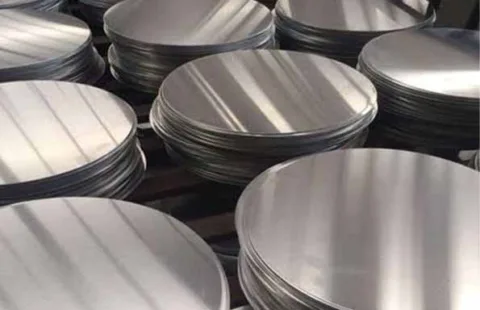
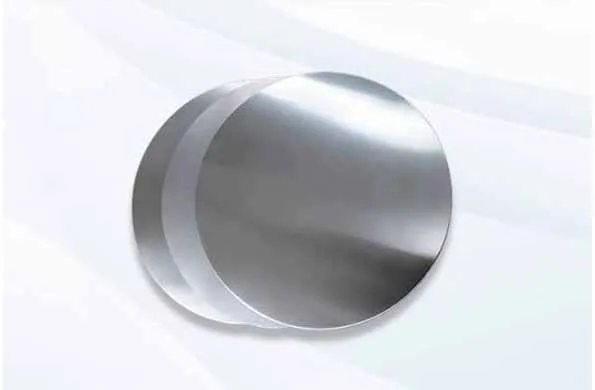
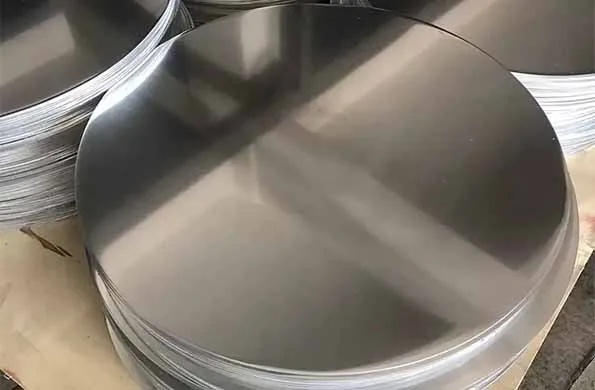
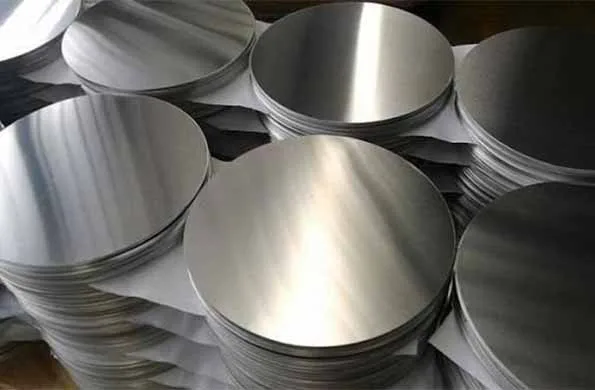
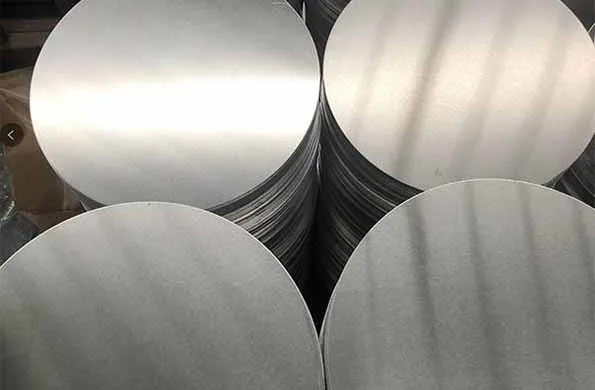
H24 3004 aluminum circle is a round aluminum disc produced from 3004 alloy in the H24 temper. It is one of the most popular aluminum blanks used in deep drawing and spinning operations worldwide.
The 3004 alloy belongs to the 3xxx series. Manganese and magnesium are the primary alloying elements. This combination delivers better strength than 3003 alloy while keeping excellent formability. The H24 temper means the material is strain-hardened and partially annealed. This gives a balance of strength and ductility that works well for forming operations.
Manufacturers use 3004 H24 aluminum circles to produce cookware, road signs, lighting reflectors, and many other everyday products. The alloy resists corrosion well and accepts surface treatments like anodizing and painting without problems.
If you need a reliable, versatile aluminum blank for high-volume production, h24 3004 aluminum circle is a proven choice.
What Is the H24 Temper Designation for Aluminum?
This is one of the most common questions buyers ask. Understanding temper codes helps you select the right material.
Breaking Down the H24 Code
The H temper system applies to strain-hardened aluminum products:
- H = Strain hardened by cold working
- 2 = Strain hardened only (partial anneal applied after hardening)
- 4 = Half-hard condition
So H24 means the aluminum was cold-rolled to increase strength, then partially annealed to restore some ductility. The result is a material that sits halfway between fully soft (O temper) and fully hard (H28).
H24 vs. Other Common Tempers
| Temper | Process | Strength | Formability | Best Use |
|---|---|---|---|---|
| O (Annealed) | Full anneal | Low | Excellent | Deep drawing |
| H22 | Strain hardened + partial anneal | Medium-low | Very good | General forming |
| H24 | Strain hardened + partial anneal | Medium | Good | Cookware, circles |
| H26 | Strain hardened + partial anneal | Medium-high | Fair | Structural parts |
| H28 | Full strain hardened | High | Low | Non-forming use |
H24 aluminum is the sweet spot for aluminum circle production. It is strong enough for structural integrity but still formable enough for deep drawing and spinning.
Why H24 Matters for Aluminum Circles
When a factory spins or draws an aluminum circle into a pot or pan, the material must stretch without cracking. H24 temper allows this. If the temper is too hard (H26 or H28), the circle cracks during forming. If it is too soft (O temper), the finished product dents too easily.
3004 H24 delivers the right balance for cookware and similar products.
Is 3004 Aluminum Good? Understanding the Alloy
Yes. 3004 aluminum is an excellent alloy for many applications. Here is why.
Chemical Composition of 3004 Aluminum
| Element | Content (%) |
|---|---|
| Manganese (Mn) | 1.0 – 1.5 |
| Magnesium (Mg) | 0.8 – 1.3 |
| Iron (Fe) | ≤ 0.70 |
| Silicon (Si) | ≤ 0.30 |
| Copper (Cu) | ≤ 0.25 |
| Zinc (Zn) | ≤ 0.25 |
| Aluminum (Al) | Remainder |
The addition of magnesium (0.8–1.3%) makes 3004 stronger than 3003. This is the key difference between the two alloys.
3004 vs. 3003 Aluminum: Key Differences
Many buyers also search for aluminum 3003 H24. It is worth understanding how these two alloys compare.
| Property | 3003 H24 | 3004 H24 |
|---|---|---|
| Tensile Strength | 150 – 195 MPa | 180 – 220 MPa |
| Yield Strength | 115 MPa min | 145 MPa min |
| Elongation | 5% min | 4% min |
| Magnesium Content | None | 0.8 – 1.3% |
| Corrosion Resistance | Excellent | Excellent |
| Formability | Slightly better | Very good |
| Typical Use | General sheet | Beverage cans, cookware |
3004 is stronger than 3003. If your application needs higher dent resistance or structural rigidity, choose 3004. If you need maximum formability for very deep draws, 3003 may suit better.
For most aluminum circle applications like pots, pans, and road signs, 3004 H24 is the preferred choice.
What Are the Properties of 3004 H24 Aluminum?
Understanding the mechanical and physical properties helps you confirm whether 3004 H24 aluminum circle fits your application.
Mechanical Properties of 3004 H24
| Property | Value |
|---|---|
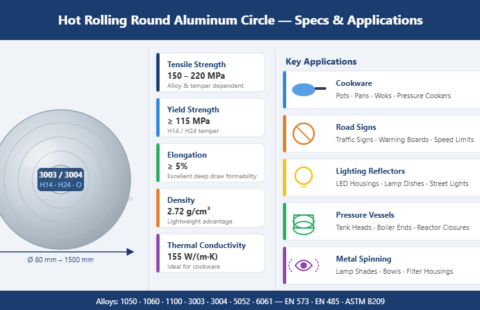
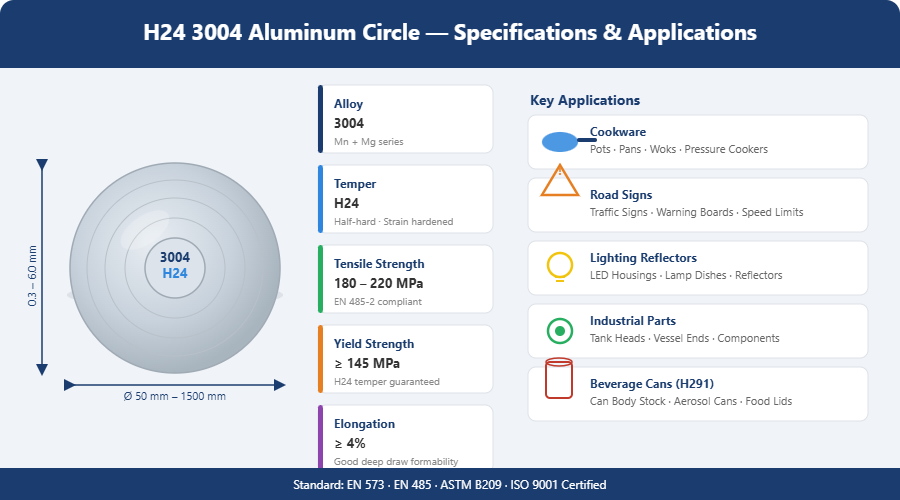
| Tensile Strength (Rm) | 180 – 220 MPa |
| Yield Strength (Rp0.2) | ≥ 145 MPa |
| Elongation (A50mm) | ≥ 4% |
| Hardness (HB) | 52 – 63 |
| Fatigue Strength | 110 MPa |
| Shear Strength | 125 MPa |
Physical Properties of 3004 Aluminum
| Property | Value |
|---|---|
| Density | 2.72 g/cm³ |
| Melting Range | 629 – 654°C |
| Thermal Conductivity | 163 W/(m·K) |
| Electrical Conductivity | 34% IACS |
| Modulus of Elasticity | 69 GPa |
| Thermal Expansion | 23.9 × 10⁻⁶/°C |
Key Performance Advantages
Corrosion Resistance
3004 resists atmospheric corrosion, moisture, and many chemicals. It performs well in outdoor environments without surface coating.
Thermal Conductivity
High thermal conductivity makes 3004 aluminum circles ideal for cookware. Heat spreads evenly across the pan surface.
Weldability
3004 welds well using MIG and TIG methods. Use 4043 or 5356 filler alloy for best results.
Anodizing Response
3004 anodizes cleanly. The anodized layer is clear and uniform. This is important for decorative cookware and architectural products.
What Are the Uses of 3004 Aluminum Circles?
3004 H24 aluminum circles serve a wide range of industries. Their combination of strength, formability, and corrosion resistance makes them versatile.
1. Cookware Manufacturing
Cookware is the largest application for h24 3004 aluminum circles. Factories use spinning and deep drawing to form circles into:
- Pots and saucepans
- Frying pans and skillets
- Pressure cookers
- Woks
- Steamer pots
- Milk pans
The high thermal conductivity ensures even heat distribution. The H24 temper allows deep drawing without cracking. After forming, manufacturers apply non-stick coatings, anodizing, or polishing.
3004 H24 is the industry standard alloy for mid-range and professional cookware. It produces a thicker, more durable product than thinner alloys.
2. Road Signs and Traffic Signs
Traffic management authorities specify aluminum circles and blanks for road signs. 3004 H24 aluminum circles offer:
- High strength — signs resist wind load and impact
- Corrosion resistance — no rusting in outdoor environments
- Light weight — easy installation and transport
- Flat surface — excellent for reflective sheeting application
Large diameter circles (up to 1500 mm) produce round warning signs and speed limit signs. The H24 temper gives the signs enough rigidity to hold their shape.
3. Lighting Reflectors and Lamp Covers
The lighting industry uses aluminum circles for:
- Lamp reflector dishes
- LED light housings
- Street light covers
- Industrial high-bay reflectors
- Ceiling light panels
Aluminum reflects light efficiently. The smooth surface of a 3004 H24 circle accepts mirror polishing or bright anodizing. This maximizes light output.
4. Beverage Can Ends (3004 H291)
3004 H291 is a specific temper used for beverage can body stock and can ends. The H291 temper is a special strain-hardened condition developed for can manufacturing.
Many buyers search for 3004 H291 and 3004 H291 aluminum specifically for:
- Aluminum beverage can bodies
- Beer and soft drink cans
- Aerosol can bodies
- Food can lids
The H291 temper provides the very high strength needed for thin-wall can production. It is different from H24 — H291 is harder and used for drawn and ironed (D&I) can bodies rather than general circle blanks.
5. Hardware and Industrial Parts
Factories also use 3004 H24 aluminum circles for:
- Pressure vessel heads
- Heat exchanger components
- Storage tank end caps
- Decorative discs and medallions
- Architectural panel blanks
The combination of corrosion resistance and mechanical strength suits industrial environments well.
3004 H291 vs. 3004 H24: What Is the Difference?
Both 3004 H291 and 3004 H24 come from the same base alloy. The difference is in the temper.
| Property | 3004 H24 | 3004 H291 |
|---|---|---|
| Process | Strain hardened + partial anneal | Special strain hardened (can body stock) |
| Tensile Strength | 180 – 220 MPa | 260 – 295 MPa (typical) |
| Yield Strength | ≥ 145 MPa | ≥ 230 MPa (typical) |
| Elongation | ≥ 4% | ~3% |
| Main Use | Cookware circles, signs | Beverage can body stock |
| Forming Method | Spinning, deep drawing | Drawn and ironed (D&I) |
3004 H291 aluminum is much harder and stronger than H24. It is not suitable for spinning or conventional deep drawing. Can manufacturers use specialized D&I equipment to form H291 sheet into can bodies.
If you need aluminum circles for cookware or signs, choose 3004 H24. If you need can body stock, 3004 H291 is the correct specification.
Standard Sizes: 24 Inch Aluminum Circle and Other Dimensions
24 inch aluminum circle (approximately 610 mm diameter) is a common size for large cookware, signs, and industrial components. However, aluminum circles are available in a wide range of sizes.
Standard Aluminum Circle Size Ranges
| Parameter | Standard Range |
|---|---|
| Diameter | 50 mm – 1500 mm |
| Thickness | 0.3 mm – 6.0 mm |
| Common diameters | 100, 150, 200, 250, 300, 400, 500, 600 mm |
| 24 inch (610 mm) | Available in 1.0 – 4.0 mm thickness |
| Surface finish | Mill finish, bright, anodizing quality |
| Edge condition | Smooth, burr-free |
Popular Sizes for Specific Applications
| Application | Diameter | Thickness |
|---|---|---|
| Small saucepan | 140 – 180 mm | 1.5 – 2.5 mm |
| Standard frying pan | 220 – 280 mm | 2.0 – 3.5 mm |
| Large wok | 300 – 400 mm | 2.5 – 4.0 mm |
| Road sign (round) | 400 – 900 mm | 2.0 – 3.0 mm |
| Industrial component | 500 – 1500 mm | 3.0 – 6.0 mm |
| 24 inch circle | 610 mm | 1.5 – 4.0 mm |
Custom Sizes Available
Most manufacturers produce custom diameters. If your production line needs a non-standard size, a good supplier can cut circles to your exact specification. Minimum order quantities apply for custom sizes.
H24 3004 Aluminum Circle Specifications
When placing an order for 3004 H24 aluminum circles, confirm these key specifications with your supplier.
Full Specification Checklist
| Parameter | Specification |
|---|---|
| Alloy | 3004 |
| Temper | H24 |
| Standard | EN 573, ASTM B209, GB/T 3880 |
| Diameter tolerance | ±0.5 mm (standard) |
| Thickness tolerance | ±0.02 mm – ±0.05 mm |
| Flatness | ≤ 3 mm per 1000 mm |
| Surface | Mill finish or bright |
| Edge quality | Clean, burr-free |
| Packaging | Interleaved with paper, on pallets |
Surface Finish Options
Mill finish — standard surface. Suitable for most industrial applications and painting.
Bright finish — reflective surface. Suitable for lighting reflectors and decorative applications.
Anodizing quality — ultra-clean surface with controlled grain structure. Required for decorative anodizing.
Pre-lubricated — light oil film applied. Reduces tooling wear during deep drawing operations.
Always specify the surface finish in your purchase order. The wrong surface can cause problems in downstream processing.
Quality Standards and Certifications
Reputable suppliers of h24 3004 aluminum circle comply with recognized international standards.
Relevant Standards
| Standard | Scope |
|---|---|
| EN 573-3 | Chemical composition — 3004 alloy |
| EN 485-2 | Mechanical properties for sheet and circles |
| ASTM B209 | Aluminum sheet and plate specification |
| GB/T 3880 | Chinese national standard for aluminum sheet |
| ISO 9001 | Quality management system |
Documents to Request with Every Order
Always ask your supplier for:
- Mill Test Certificate (MTC) — confirms alloy, temper, and mechanical properties
- Certificate of Conformance — confirms compliance with the agreed standard
- Inspection Report — diameter, thickness, surface quality, and weight
- Packing List — identifies each bundle with quantity and weight
These documents protect you in quality disputes and customs clearance.
Pricing Factors for 3004 H24 Aluminum Circles
The price of h24 3004 aluminum circle depends on several factors.
What Affects the Price
LME Aluminum Base Price
All aluminum products price against the London Metal Exchange (LME) aluminum price. This changes daily.
Alloy Premium
3004 contains manganese and magnesium. These alloying elements add cost above the pure aluminum base price.
Temper Processing
H24 requires cold rolling plus controlled annealing. This adds fabrication cost compared to O temper circles.
Diameter and Thickness
Larger diameter circles waste more material during cutting. Thicker circles use more aluminum. Both increase the per-piece price.
Surface Finish
Bright finish and anodizing-quality surfaces require additional processing. They cost more than standard mill finish.
Order Quantity
Larger orders reduce the per-kilogram price. Most factories offer significant discounts above 5 metric tons.
Packaging
Export packaging (interleaving paper, wooden pallets, shrink wrap) adds to the delivered cost.
Typical Price Structure
| Order Size | Price Level |
|---|---|
| Sample order (< 200 kg) | Premium — setup costs apply |
| Small order (200 kg – 2 MT) | Above standard market price |
| Medium order (2 MT – 10 MT) | Competitive market price |
| Large order (> 10 MT) | Best available pricing |
Request a current quotation from your supplier. Prices change with LME aluminum rates.
Why Buy H24 3004 Aluminum Circles from a Manufacturer?
Buying directly from a manufacturer of 3004 H24 aluminum circles gives you clear advantages.
Key Advantages
Lower Cost
No trading markup. Factory prices are the most competitive available for volume orders.
Custom Specifications
Manufacturers produce circles to your exact diameter, thickness, and surface finish. Traders stock standard sizes only.
Consistent Quality
Factory quality control covers every step — alloy composition, rolling, annealing, cutting, and inspection. Batch consistency is much higher than buying from multiple sources.
Full Traceability
Each batch links to production records. You can trace any circle back to the original melt. This matters for food-contact applications and regulated industries.
Technical Support
Factory engineers help you select the right temper, thickness, and surface for your application. They understand deep drawing and spinning processes.
Stable Supply
A manufacturer with proper capacity handles large orders on schedule. Supply disruptions are less common than with smaller traders.
What to Check When Choosing a Supplier
- Dedicated aluminum circle production equipment (not just sheet cutting)
- ISO 9001 certification
- Experience supplying your industry (cookware, signage, lighting)
- Ability to provide MTC and conformance certificates
- Export experience and knowledge of shipping requirements
- Responsive communication and after-sales support
Packaging and Shipping for Export Orders
Proper packaging prevents surface damage during ocean shipping.
Standard Export Packaging for Aluminum Circles
- Interleaving: Protective paper between each circle prevents surface scratching
- Bundle wrapping: Kraft paper or PE film around each bundle
- Pallet: ISPM 15 certified wooden pallet
- Strapping: Steel or polyester strapping to secure bundles
- Labels: Alloy, temper, diameter, thickness, quantity, and weight on each bundle
Shipping Methods
| Method | Best For |
|---|---|
| 20ft container | Orders up to 18–20 MT |
| 40ft container | Orders up to 22–25 MT |
| LCL (groupage) | Small orders below container load |
Request photos of packed goods before shipment. Confirm bill of lading details match your purchase order exactly.
Frequently Asked Questions
What is the H24 temper designation for aluminum?
H24 means the aluminum was strain-hardened by cold rolling and then partially annealed. It is a half-hard condition. The material is stronger than fully annealed aluminum but still formable enough for deep drawing and spinning operations.
Is 3004 aluminum good?
Yes. 3004 aluminum is an excellent alloy. It is stronger than 3003 due to its magnesium content. It offers great corrosion resistance, good formability, excellent weldability, and responds well to anodizing. It is the industry standard for cookware circles and beverage cans.
What are the uses of 3004 aluminum circles?
Main uses include cookware (pots, pans, woks), road signs, lighting reflectors, pressure vessel heads, and industrial components. The 24 inch aluminum circle size is popular for large cookware and signage applications.
What are the properties of 3003 H24 aluminum material?
Aluminum 3003 H24 has tensile strength of 150–195 MPa and yield strength of around 115 MPa. It has slightly better formability than 3004 H24 but lower strength. It suits light-duty cookware and general sheet metal fabrication where maximum formability is needed.
What is 3004 H291 aluminum used for?
3004 H291 is a special temper used for beverage can body stock. It is much harder and stronger than H24. It is not suitable for conventional spinning or deep drawing. Can manufacturers use it in drawn-and-ironed (D&I) production lines for aluminum beverage cans.
What size aluminum circles are available?
Aluminum circles are available from 50 mm to 1500 mm diameter and 0.3 mm to 6.0 mm thickness. 24 inch aluminum circles (610 mm diameter) are a popular standard size for large pots and signs. Custom diameters are available from most manufacturers.