3105 Aluminum Disc: Properties, Composition, Applications
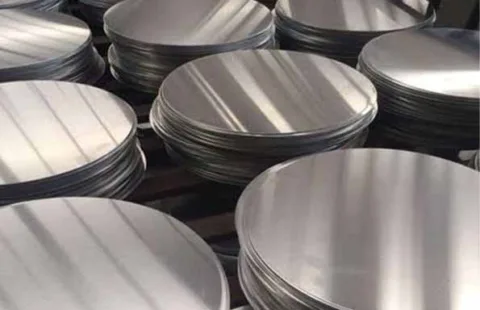
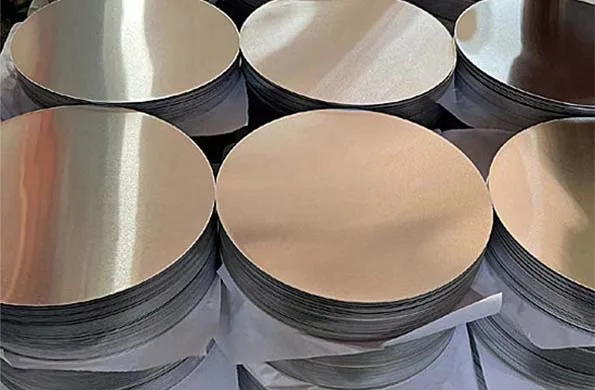
A 3105 aluminum disc is a round aluminum blank made from 3105 aluminum sheet. It combines good formability, corrosion resistance, moderate strength, and low weight. These properties make 3105 aluminum discs suitable for formed parts, building components, closures, decorative products, and general fabrication.
Compared with pure aluminum grades, 3105 provides higher strength while maintaining good forming performance. Compared with 5052 aluminum, 3105 offers a different balance between strength, formability, corrosion resistance, and cost. This guide explains 3105 aluminum disc properties, 3105 aluminum composition, density, common applications, and the key differences between 3105 and 5052 aluminum.


1. What Is a 3105 Aluminum Disc?
A 3105 aluminum disc is a pre-cut circular blank produced from 3105 aluminum sheet or coil. The material is cut into a specified diameter before it is stamped, pressed, drawn, spun, coated, or machined into the final component.
3105 is a non-heat-treatable aluminum alloy in the 3000 series. Its main alloying elements are manganese and magnesium. The alloy is designed to provide a useful combination of strength, formability, corrosion resistance, and weldability. It is commonly supplied in tempers such as H14 and H24, while softer tempers can be selected when more forming is required. :contentReference[oaicite:2]{index=2}
For disc production, the correct temper is important. A softer 3105 aluminum disc is easier to form deeply, while H14 or H24 material provides higher strength for components that need better rigidity after forming.
| Item | 3105 Aluminum Disc | Typical Requirement |
| Alloy | 3105 | 3000 series aluminum-manganese alloy |
| Product form | Round disc / circular blank | Stamped, drawn, spun, coated or machined |
| Heat treatment | Non-heat-treatable | Strength mainly controlled by cold working |
| Common tempers | O, H14, H24 | Select according to forming and strength requirements |
2. What Are Aluminum Disks?
Aluminum disks, also called aluminum discs or aluminum circle plates, are flat circular blanks cut from aluminum sheet or coil. They are supplied as semi-finished products and are normally processed into a finished component by the customer.
The production process normally starts with aluminum rolling. The aluminum alloy is rolled to the required thickness and temper. The sheet or coil is then cut into circular blanks by stamping, punching, laser cutting, or other suitable methods. For high-volume production, stamping is usually more efficient. :contentReference[oaicite:3]{index=3}
The advantage of buying an aluminum disc instead of cutting every circle from a full sheet is efficiency. The customer receives a ready-to-form blank with a controlled diameter. This can reduce cutting work, material waste, and production time.
Why choose a 3105 aluminum disc?
3105 aluminum discs are useful when the application needs more strength than pure aluminum while still requiring good forming performance. The alloy also has good atmospheric corrosion resistance and can be processed by common aluminum fabrication methods. :contentReference[oaicite:4]{index=4}
3. 3105 Aluminum Properties
The performance of a 3105 aluminum disc depends on alloy, temper, thickness, and manufacturing condition. In general, 3105 provides a good balance between strength and formability. It is not a heat-treatable alloy, so its mechanical strength is mainly increased through cold working. :contentReference[oaicite:5]{index=5}
| Property | Typical Value | Importance for Discs |
| Density | Approx. 2.72 g/cm³ | Lightweight material for formed components |
| Elastic modulus | Approx. 69 GPa | Provides predictable stiffness |
| Formability | Good | Suitable for stamping, bending and forming |
| Corrosion resistance | Good | Suitable for many atmospheric and outdoor applications |
| Heat treatment | Non-heat-treatable | Temper is produced mainly by strain hardening |
The commonly published density of 3105 aluminum is about 2.71–2.72 g/cm³, while the exact mechanical properties depend on the temper and thickness. :contentReference[oaicite:6]{index=6}
4. 3105 Aluminum Density
3105 aluminum density is approximately 2.72 g/cm³ at room temperature. This low density is one of the main reasons aluminum discs are widely used when weight reduction is important. NIST lists a density of 2.71 g/cm³ for 3105, while other commonly referenced data for 3105-H24 gives approximately 2.72 g/cm³. :contentReference[oaicite:7]{index=7}
For buyers, density is useful when calculating the weight of a 3105 aluminum disc. A simple calculation can be made using the disc diameter, thickness, and material density. The actual shipping weight can then be checked against the supplier’s packing list or mill documentation.
Disc weight formula: Weight = π × radius² × thickness × density.
When dimensions are given in millimeters, the result should be converted into a consistent unit before calculating the final weight.
5. 3105 Aluminum Composition and Chemistry
3105 aluminum chemistry is based on an aluminum matrix with manganese and magnesium as the main alloying elements. Small amounts of copper, silicon, iron, zinc, chromium, and other elements are controlled within specification limits.
| Element | Typical / Maximum Content (%) | Function |
| Aluminum (Al) | Balance | Base metal providing low density and corrosion resistance |
| Manganese (Mn) | 0.30–0.80 | Main alloying element contributing to strength |
| Magnesium (Mg) | 0.20–0.80 | Supports strength and corrosion performance |
| Silicon (Si) | ≤0.60 | Controlled impurity |
| Iron (Fe) | ≤0.70 | Controlled impurity |
| Copper (Cu) | ≤0.30 | Controlled alloying element |
| Zinc (Zn) | ≤0.40 | Controlled minor element |
The commonly referenced 3105 composition limits include 0.30–0.80% Mn, 0.20–0.80% Mg, up to 0.30% Cu, 0.60% Si, and 0.70% Fe, with aluminum as the balance. :contentReference[oaicite:8]{index=8}
This chemistry explains why 3105 sits between softer pure-aluminum grades and stronger structural alloys. The manganese and magnesium additions improve strength without turning the alloy into a heat-treatable grade.
6. What Is 3105 Aluminum Used For?
3105 aluminum is used in applications that need a combination of moderate strength, good formability, corrosion resistance, and economical production. Common applications include building products, siding, gutters, mobile homes, general sheet metal work, signs, closures, and formed components. :contentReference[oaicite:9]{index=9}
When supplied as a 3105 aluminum disc, the material can be used as a ready-made circular blank for downstream forming or fabrication.
| Application | Why 3105? | Typical Processing |
| Formed components | Good formability and moderate strength | Stamping, pressing, spinning |
| Building products | Lightweight and corrosion resistant | Roll forming, bending, coating |
| Closures and caps | Good formability and surface quality | Stamping and forming |
| Sign and decorative parts | Good surface and corrosion resistance | Cutting, coating, printing |
| General fabrication | Balanced mechanical properties | Bending, punching, forming |
7. What Are the Key Differences Between 3105 and 5052 Aluminum?
3105 and 5052 are both widely used wrought aluminum alloys, but they are designed for different performance priorities. 3105 belongs to the 3000 series, while 5052 belongs to the 5000 series. 5052 generally provides higher strength and is widely selected for marine, transportation, pressure, and structural applications. 3105 focuses more on a balanced combination of formability, corrosion resistance, and moderate strength. :contentReference[oaicite:10]{index=10}
| Feature | 3105 Aluminum | 5052 Aluminum | Better Choice |
| Series | 3000 series | 5000 series | Depends on application |
| Main alloying element | Manganese + magnesium | Magnesium | — |
| Strength | Moderate | Higher in common tempers | 5052 |
| Formability | Good | Good to excellent depending on temper | Application dependent |
| Corrosion resistance | Good | Excellent | 5052 for demanding environments |
| Typical applications | Building products, formed parts, closures | Marine, pressure, structural parts | Depends on service conditions |
When should you choose 3105 instead of 5052?
Choose 3105 when moderate strength, good formability, corrosion resistance, and economical production are the main priorities. It is a practical choice for formed and general-purpose components where the higher strength of 5052 is not necessary.
Choose 5052 when higher strength or more demanding marine and structural service is required. 5052 is also widely used for pressure vessels, fuel tanks, marine components, and other applications where its higher strength and corrosion resistance are important.
8. 3105 Aluminum Disc Sizes and Specifications
The diameter and thickness of a 3105 aluminum disc should be selected according to the final forming process. Small discs are commonly used for compact formed components, while larger circles are used for panels, covers, containers, and other fabricated parts.
| Specification | Typical Options | Buyer Should Confirm |
| Alloy | 3105 | Chemical composition standard |
| Temper | O, H14, H24 and other specified tempers | Required forming and strength |
| Diameter | Custom diameter available | Finished part dimensions |
| Thickness | According to production requirement | Drawing depth, strength and tolerance |
| Surface | Mill finish or specified surface | Forming, coating or appearance requirements |
9. How to Choose the Right 3105 Aluminum Disc
Choosing a 3105 aluminum disc is not only about diameter. The alloy, temper, thickness, surface, dimensional tolerance, and forming method should all match the final product.
For deep forming
Select a softer temper when the disc will undergo significant drawing or forming. Excessive hardness can increase forming force and reduce formability.
For higher rigidity
H14 or H24 can provide a better balance when the finished component needs more strength and dimensional stability. Published data show that mechanical properties vary with temper and thickness, so the exact requirement should be confirmed against the applicable specification. :contentReference[oaicite:11]{index=11}
For high-volume production
Ask for consistent diameter, thickness tolerance, flatness, edge quality, and temper from batch to batch. Stable incoming material helps reduce problems during stamping and forming.
10. 3105 Aluminum Disc Price Factors
The price of a 3105 aluminum disc depends on more than the aluminum market price. Diameter, thickness, temper, order quantity, cutting method, tolerance, surface requirements, and packaging all affect the final quotation.
| Price Factor | Effect on Cost |
| Aluminum market price | The basic material price changes with the aluminum market. |
| Diameter and thickness | Larger or thicker discs require more aluminum per piece. |
| Temper | Different rolling and annealing requirements affect processing cost. |
| Quantity | Large production orders usually reduce the processing cost per disc. |
| Tolerance | Tighter diameter and thickness tolerances can increase production cost. |
11. 3105 Aluminum Disc RFQ Checklist
When requesting a quotation for 3105 aluminum discs, providing complete specifications helps the supplier calculate the correct price and production method.
- Alloy: 3105
- Temper: O, H14, H24 or required temper
- Disc diameter: exact diameter in mm
- Thickness: exact thickness in mm
- Quantity: pieces, kilograms or metric tons
- Surface: mill finish or special surface requirement
- Diameter tolerance: standard or customized
- Edge requirement: standard cut or special edge condition
- Packaging: export seaworthy packing if required
For a custom 3105 aluminum disc, a technical drawing is even better. The drawing can show diameter, thickness, tolerance, surface requirements, hole position, and other downstream processing requirements.
12. Frequently Asked Questions About 3105 Aluminum Disc
Is 3105 aluminum good for forming?
Yes. 3105 has good formability and is suitable for bending, stamping, and other forming processes. Softer tempers are preferred when the forming operation is more demanding. :contentReference[oaicite:12]{index=12}
Is 3105 aluminum stronger than 3003?
Generally, 3105 can provide slightly higher strength than 3003 in comparable tempers while maintaining good formability. The exact comparison depends on temper and thickness.
What is the density of 3105 aluminum?
The density of 3105 aluminum is approximately 2.72 g/cm³. Published references may show slightly different typical values depending on the data source. :contentReference[oaicite:13]{index=13}
Is 3105 aluminum heat treatable?
No. 3105 is a non-heat-treatable aluminum alloy. Its strength is mainly adjusted through cold working and temper control. :contentReference[oaicite:14]{index=14}
Is 3105 aluminum suitable for aluminum discs?
Yes. 3105 is suitable when the application requires a combination of moderate strength, formability, corrosion resistance, and low weight. The final temper should be selected according to the forming process and required mechanical properties.
13. Get a Quote for 3105 Aluminum Disc
If you are looking for 3105 aluminum discs for stamping, forming, building components, closures, signs, or general fabrication, send us your required alloy, temper, diameter, thickness, quantity, and tolerance.
We can help you select a suitable 3105 aluminum disc specification and provide a quotation based on your order quantity and dimensions. For custom-size discs, please include a technical drawing or detailed dimensional requirements.