Aluminum Circle 1050 Disc for Cookware and Industrial Applications
What Is an Aluminum Circle 1050 Disc?
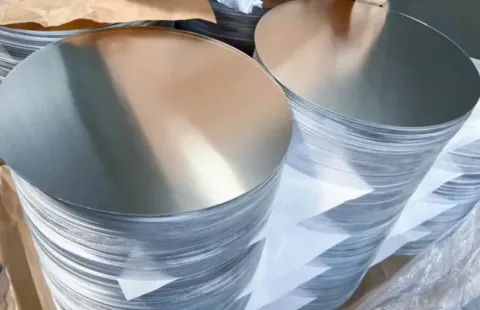
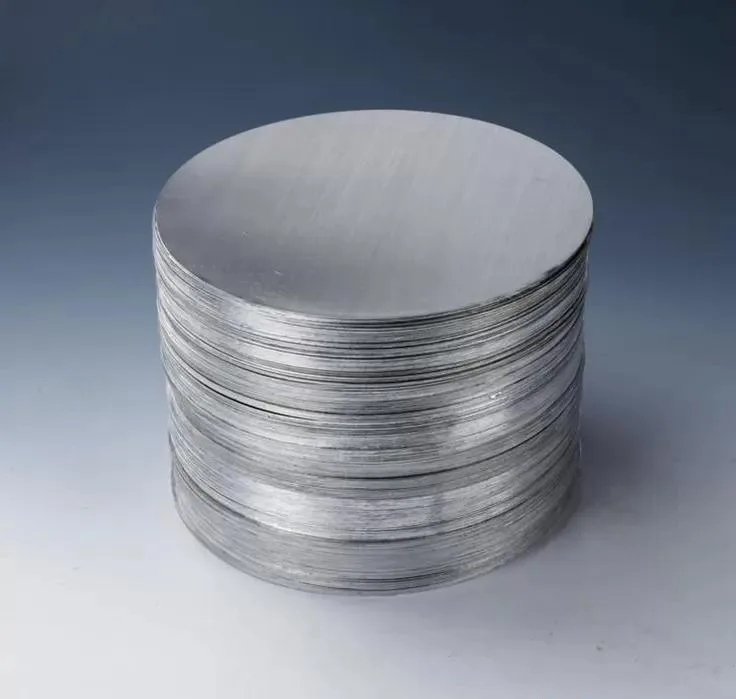
An aluminum circle 1050 disc is a round, flat aluminum blank made from 1050 aluminum alloy. It is widely used in cookware manufacturing, kitchen utensils, lighting components, and other products that require good formability, corrosion resistance, and thermal conductivity.
The 1050 aluminum alloy belongs to the 1000 series of commercially pure aluminum. It contains at least 99.5% aluminum, making it suitable for applications where high purity, easy processing, and reliable performance are important.
For manufacturers producing frying pans, cooking pots, saucepans, and aluminum containers, an aluminum circle 1050 disc provides a practical starting material for stamping, deep drawing, spinning, and other forming processes. The round shape also helps reduce unnecessary material waste during production.
As an aluminum circle manufacturer, Worthwill Aluminum can help buyers select suitable alloy specifications, dimensions, and tempers according to their production requirements.

Key Specifications of Aluminum Circle 1050 Disc
The specifications of an aluminum circle 1050 disc depend on its end use and forming process. Cookware manufacturers often prioritize thickness consistency, surface quality, and elongation, while other industrial applications may require different dimensions or mechanical properties.
Typical specifications include:
| Parameter | Typical Specification |
|---|---|
| Alloy | 1050 aluminum |
| Aluminum content | 99.5% minimum |
| Available tempers | O, H12, H14, H16, H18 |
| Thickness | 0.3–6.0 mm |
| Diameter | 100–1200 mm |
| Surface finish | Mill finish, customized finish |
| Processing methods | Stamping, deep drawing, spinning |
| Shape | Round disc or circle |
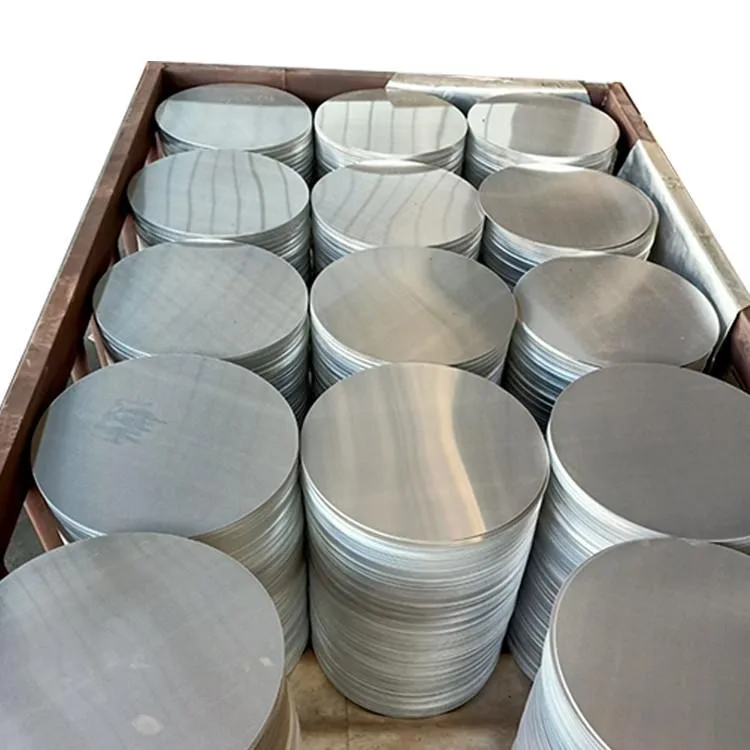
| Packaging | Export-standard wooden pallets or cases |
These values are general reference ranges rather than a guarantee that every combination is available. Actual specifications should be confirmed with the manufacturer before ordering.
For deep-drawn cookware, 1050-O aluminum circles are often preferred because the annealed temper offers excellent ductility. For applications requiring greater strength or stiffness, an appropriate work-hardened temper may be more suitable.
Why Choose 1050 Aluminum Circles for Cookware?
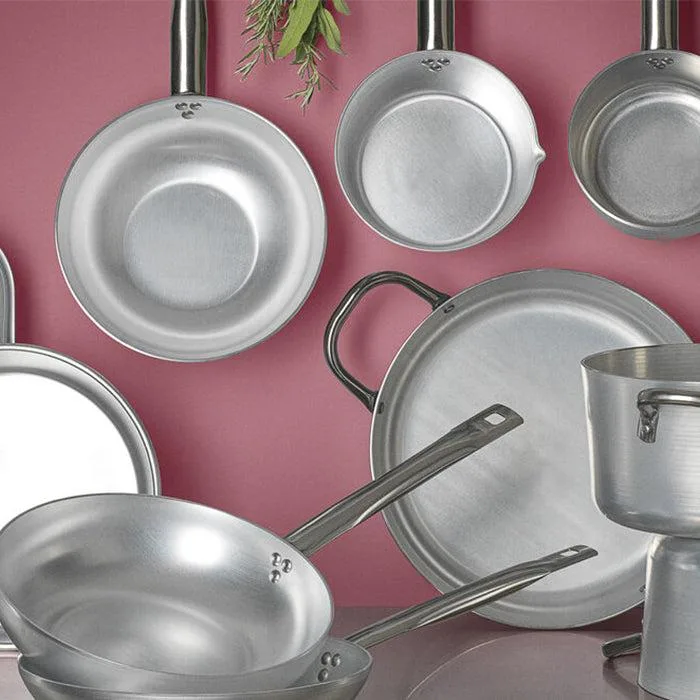
Cookware manufacturing requires materials that can withstand forming operations while providing good heat transfer and a suitable surface for finishing. Aluminum circle 1050 disc products meet many of these requirements.
1. Excellent Formability
One of the main advantages of 1050 aluminum is its excellent formability, especially in the O temper. It can be shaped into different cookware designs through deep drawing, stamping, and metal spinning.
This makes it suitable for manufacturing frying pans, cooking pots, stockpots, and other drawn aluminum utensils. Good formability also helps reduce cracking and tearing during production when the material temper, thickness, and forming conditions are properly selected.
2. Good Thermal Conductivity
Aluminum transfers heat efficiently, making it a common material for cookware. A 1050 aluminum disc can help distribute heat across the body or base of a cooking vessel.
The actual heating performance depends on the disc thickness, cookware design, and any additional base layers. For induction cookware, a compatible magnetic stainless steel layer or another suitable induction-compatible structure is generally required because pure aluminum is not magnetic.
3. Excellent Corrosion Resistance
The naturally formed oxide film on aluminum provides protection against many common environmental conditions. This helps aluminum circles maintain their performance during normal cookware manufacturing and use.
For food-contact products, the final cookware must also comply with applicable food-contact requirements. Surface treatments, coatings, and manufacturing processes should be selected according to the intended application and destination market.
4. Lightweight Construction
Compared with many other metals, aluminum has a low density of approximately 2.7 g/cm³. Cookware made from aluminum circles is therefore relatively lightweight and convenient to handle.
Lower product weight can also help manufacturers manage material consumption, packaging, and transportation costs.
5. Suitable for Multiple Finishing Processes
Depending on the alloy temper and production process, aluminum circles can be polished, anodized, coated, or incorporated into cookware with non-stick surfaces.
The suitability of each finishing method depends on the final product design and the requirements of the coating or treatment process. Manufacturers should confirm compatibility before mass production.
Applications of Aluminum Circle 1050 Disc
The versatility of 1050 aluminum makes it useful in several manufacturing industries. The most appropriate application depends on the required forming depth, final strength, surface finish, and operating conditions.
Aluminum Cookware Manufacturing
Cookware is one of the important applications for aluminum circles. Manufacturers use round blanks to produce:
- Frying pans and omelet pans
- Cooking pots and saucepans
- Stockpots and aluminum kettles
- Cooking utensil bodies
- Aluminum trays and containers
For deep-drawn cookware, 1050-O aluminum circles are a common option because of their high ductility. The diameter and thickness should match the dimensions of the finished product and the forming equipment.
Kitchen Utensils and Household Products
In addition to cookware, aluminum circle 1050 disc products can be used to manufacture kitchen bowls, lids, serving utensils, and selected household metal components.
The material’s low weight and ease of processing help manufacturers produce components in different sizes and shapes.
Lighting Reflectors and Components
Aluminum circles can also serve as blanks for selected lighting reflectors, lamp housings, and decorative components. Formability and surface quality are important for products that require smooth curves or an attractive finish.
The required alloy temper and surface treatment should be selected according to the reflectivity, forming depth, and appearance requirements of the finished component.
General Industrial Components
Other applications include formed metal covers, shallow-drawn containers, and round components used in general fabrication. Where the design requires extensive deformation, the material’s elongation and forming characteristics should be evaluated before production.
1050 Aluminum Circle Disc Temper Selection
Temper selection is an important factor when purchasing aluminum circles. It affects strength, elongation, and the material’s response to forming.
| Temper | General Characteristics | Typical Application Considerations |
|---|---|---|
| 1050-O | Soft, high ductility, excellent formability | Deep-drawn cookware and complex shapes |
| 1050-H12 | Partially work-hardened | Components requiring moderate strength |
| 1050-H14 | Half-hard condition | General formed components and less demanding forming operations |
| 1050-H16 | Higher strength than H14 | Applications requiring greater stiffness |
| 1050-H18 | Fully hard condition among common H tempers | Flat or lightly formed components requiring higher strength |
These tempers are not interchangeable. A harder temper may improve stiffness but can reduce the material’s ability to withstand severe drawing.
For cookware manufacturers, 1050-O is often the starting point for deep drawing, while H12 or H14 may suit products with less demanding forming requirements. The correct choice should be based on actual tooling, drawing depth, and finished-product requirements.
Aluminum Circle 1050 Disc vs. 1060 and 3003 Aluminum Circles
When sourcing aluminum circles, buyers often compare 1050 with 1060 and 3003 alloys. Although all three can be used in selected formed products, their composition and performance differ.
| Comparison Factor | 1050 Aluminum | 1060 Aluminum | 3003 Aluminum |
|---|---|---|---|
| Alloy series | 1000 series | 1000 series | 3000 series |
| Aluminum content | 99.5% minimum | 99.6% minimum | Lower due to alloying elements |
| Main characteristics | High purity, good formability | Higher aluminum purity | Improved strength compared with pure aluminum in comparable conditions |
| Thermal conductivity | High | High | Generally lower than pure aluminum |
| Corrosion resistance | Good | Good | Good |
| Cookware suitability | Suitable for many drawn products | Suitable for selected cookware and formed products | Suitable where greater strength is beneficial |
| Key selection factor | Formability and general-purpose performance | Purity and thermal performance | Strength and application requirements |
The best choice depends on the finished product rather than alloy designation alone. For cookware requiring deep drawing and efficient heat transfer, 1050 or 1060 may be appropriate. For designs that need greater strength, 3003 can be considered.
Manufacturers should compare mechanical properties in the specified temper before making a final decision.
What Affects Aluminum Circle 1050 Disc Prices?
The price of an aluminum circle 1050 disc depends on several factors. Buyers should provide complete specifications when requesting a quotation to avoid comparing products with different material and processing requirements.
1. Aluminum Raw Material Prices
Aluminum prices fluctuate with market conditions, raw material costs, and regional supply and demand. These changes directly affect the base cost of aluminum circles.
2. Thickness and Diameter
The diameter and thickness determine the weight of each disc and influence material consumption. Larger or thicker circles generally contain more aluminum per piece.
The weight of a single disc can be estimated using:
Disc weight (kg) = π × diameter² × thickness × 2.71 ÷ 4,000,000
In this formula, diameter and thickness are measured in millimeters, and 2.71 represents the approximate density of aluminum in g/cm³.
For example, a 300 mm diameter aluminum circle with a thickness of 2 mm weighs approximately 0.383 kg before accounting for manufacturing tolerances.
3. Temper and Mechanical Requirements
O-temper circles and work-hardened circles may involve different processing requirements. Products requiring tightly controlled mechanical properties or demanding forming performance may also need additional quality checks.
4. Surface Quality and Tolerances
Requirements for thickness tolerance, flatness, surface cleanliness, and edge quality can influence production costs. Cookware manufacturers should specify whether the circles need to be free from oil stains, scratches, oxidation, or other visible defects.
5. Order Quantity and Packaging
Larger orders may offer better unit pricing because production, packing, and logistics costs can be distributed across more pieces. Customized dimensions, special packaging, and small production batches may affect the final quotation.
For an accurate aluminum circle 1050 disc price, buyers should provide the alloy, temper, thickness, diameter, quantity, surface requirements, and delivery destination.
How to Choose a Reliable Aluminum Circle Manufacturer
Choosing the right manufacturer is important for maintaining consistent production quality and reducing material waste.
Check alloy and temper consistency. Confirm that the supplied material meets the agreed chemical composition and mechanical property requirements.
Evaluate dimensional accuracy. Consistent diameter and thickness help maintain stable production conditions and improve blank positioning during forming.
Inspect surface quality. Scratches, stains, uneven surfaces, and other defects may affect the appearance of finished cookware, particularly products with polished or coated surfaces.
Confirm forming performance. If the circles will undergo deep drawing, discuss the required temper, elongation, and forming depth with the supplier. Trial samples can help verify suitability before a large order.
Review packaging and export experience. Aluminum circles should be protected against moisture, impact, and surface damage during storage and international transportation.
Request the relevant documentation. Depending on the market and application, buyers may require a mill test certificate, inspection records, or documentation related to food-contact compliance for the finished product.
A reliable supplier should be able to discuss these requirements clearly and provide specifications that match the buyer’s manufacturing process.
Why Choose Worthwill Aluminum for Aluminum Circle 1050 Disc?
Worthwill Aluminum supplies aluminum products for international industrial buyers and supports customized requirements for aluminum circles. For cookware manufacturers, the goal is to match the material specifications with the intended forming process and finished product.
When sourcing aluminum circle 1050 disc products, buyers can discuss the following requirements with Worthwill Aluminum:
- Customized dimensions: Specify the required thickness and diameter according to your cookware drawings.
- Temper selection: Discuss O temper and suitable work-hardened tempers for different forming operations.
- Surface quality: Define the surface condition and appearance requirements for your production line.
- Bulk supply: Plan quantities according to production schedules and purchasing requirements.
- Export packaging: Confirm protective packaging suitable for international shipping.
- Specification support: Provide your application details so the appropriate material option can be evaluated.
Before placing a bulk order, buyers should confirm the available dimensions, production tolerances, lead time, and inspection requirements with the supplier.
Frequently Asked Questions About Aluminum Circle 1050 Disc
1. What is an aluminum circle 1050 disc used for?
An aluminum circle 1050 disc is used to manufacture cookware, kitchen utensils, shallow-drawn containers, lighting components, and other round metal parts. Its high aluminum content, good corrosion resistance, and formability make it suitable for many general-purpose applications.
2. Is 1050 aluminum suitable for making cookware?
Yes. 1050 aluminum is suitable for many cookware applications because it offers good thermal conductivity and formability. The O temper is often selected for deep drawing. The final product must meet the applicable food-contact requirements for its intended market.
3. What is the best temper for deep-drawing aluminum circles?
The O temper is commonly preferred for deep drawing because it is soft and ductile. However, the best temper depends on the drawing depth, tooling design, blank-holder force, lubrication, and finished-product geometry.
4. What is the difference between 1050 and 1060 aluminum circles?
Both are commercially pure aluminum alloys with good thermal conductivity and formability. The main difference is their minimum aluminum content: 1050 contains at least 99.5% aluminum, while 1060 contains at least 99.6%. The practical choice depends on the required properties, specifications, and manufacturing process.
5. Can 1050 aluminum circles be used for non-stick cookware?
Yes. A 1050 aluminum circle can be used as the base material for cookware that receives a non-stick coating. The circle is formed into the required shape, then prepared and coated using a suitable manufacturing process. Coating adhesion and durability depend on surface preparation and the coating system.
6. How do I calculate the weight of an aluminum circle?
Use the following formula:
Disc weight (kg) = π × diameter² × thickness × 2.71 ÷ 4,000,000.
Enter the diameter and thickness in millimeters. This provides an approximate theoretical weight. Actual weight may vary slightly because of dimensional tolerances.
7. How can I get a quotation for aluminum circle 1050 disc?
Provide the required alloy and temper, thickness, diameter, quantity, surface finish, packaging requirements, and destination country. If the circles are intended for cookware, also describe the forming process and finished-product requirements. This information helps the manufacturer recommend a suitable specification and prepare a more accurate quotation.
Request a Quote for Aluminum Circle 1050 Disc
Looking for a dependable aluminum circle 1050 disc supplier for cookware or industrial production? Worthwill Aluminum can help you evaluate suitable specifications for your application.
Send your required diameter, thickness, temper, order quantity, and destination country to discuss product availability, pricing, and delivery arrangements.
Contact Worthwill Aluminum today to request a quotation for your next aluminum circle order.