Aluminium cookware complete guide
Aluminium cookware is the most widely used cookware material in professional kitchens and household settings worldwide. Lightweight, thermally efficient, and cost-effective, aluminum cookware accounts for a significant share of global cookware production — from entry-level stamped pots to heavy-gauge cast aluminum skillets.
This guide covers everything buyers, manufacturers, and importers need to know: safety, material comparisons, alloy selection, casting methods, and how to evaluate an aluminium cookware set for B2B procurement.


1. What Is Aluminium Cookware?
Aluminium cookware refers to pots, pans, woks, steamers, pressure cookers, and baking trays manufactured from aluminum alloys — primarily 1xxx (commercially pure), 3003, and 8011 series alloys. The material is formed through deep drawing, spinning, or casting processes.
Aluminum has been the dominant cookware metal since the early 20th century. Its thermal conductivity (155–222 W/m·K depending on alloy) is roughly 10–15× higher than stainless steel, making it far more energy-efficient on the stovetop.
Three main manufacturing routes for aluminium cookware:
- Stamped / deep-drawn — Aluminum sheet or circle blanks are pressed into shape. Fast, cost-efficient, produces thinner-walled cookware.
- Spun — A rotating blank is formed over a mandrel. Used for round pots and pans with uniform wall thickness.
- Cast aluminum — Molten aluminum is poured into molds (die casting or sand casting). Produces thicker, heavier cookware with superior heat retention.
2. Is Aluminium Cookware Safe for Cooking?
The question “is aluminium cookware safe for cooking” is among the most searched topics in this category. The answer, based on established food science and regulatory guidance, is: yes — with appropriate use and surface treatment.
2.1 What the Science Says
Aluminum is naturally present in soil, water, and many foods including tea, herbs, and grains. The World Health Organization (WHO) sets an acceptable weekly intake of 2 mg of aluminum per kilogram of body weight. Studies consistently show that aluminum migration from properly manufactured cookware stays well below this threshold under normal cooking conditions.
2.2 Anodized vs. Raw Aluminum
Hard-anodized aluminum cookware has an electrochemically hardened oxide layer that acts as a barrier between the metal and food. This surface is non-reactive, scratch-resistant, and significantly reduces any aluminum migration. Most commercial-grade aluminum cookware sets today are either hard-anodized or coated with non-stick (PTFE/ceramic) layers for this reason.
2.3 Aluminum Cookware Health Risks — Context
Concerns about aluminum cookware health risks often center on two areas:
- Highly acidic foods — Cooking tomatoes, citrus, or vinegar-based sauces in bare (uncoated) aluminum for extended periods can increase aluminum leaching. The solution is simple: use anodized or coated cookware for acidic dishes, or limit cooking time.
- Alzheimer’s disease links — Early studies suggested a possible connection, but decades of follow-up research have not established a causal relationship. Major health organizations including WHO and EFSA do not classify aluminum cookware as a health hazard under normal use conditions.
2.4 Is Aluminium Cookware Banned in Europe?
No. Aluminium cookware is not banned in Europe. This is a persistent myth. The EU regulates food-contact materials under Framework Regulation (EC) No 1935/2004, and aluminum cookware continues to be manufactured, sold, and used legally across all EU member states. Some older discussions about potential future restrictions were never enacted into law.
| Cookware Type | Safety Level | Notes |
|---|---|---|
| Hard-anodized aluminum | ★★★★★ | Non-reactive surface, suitable for all foods |
| Non-stick coated aluminum (PTFE/ceramic) | ★★★★☆ | Safe when coating is intact; replace if heavily scratched |
| Polished / bare aluminum | ★★★☆☆ | Avoid prolonged acidic cooking; fine for general use |
| Cast aluminum (uncoated) | ★★★☆☆ | Same guidance as bare aluminum; season before use |
3. Aluminium Cookware Pros and Cons
Understanding the full picture of aluminium cookware pros and cons helps buyers make informed sourcing and purchasing decisions.
| ✅ Advantages | ⚠️ Limitations |
|---|---|
| Excellent thermal conductivity — heats fast and evenly | Bare aluminum reacts with acidic or alkaline foods |
| Lightweight — easier to handle than cast iron or steel | Thin-gauge stamped pans can warp under high heat |
| Lower cost than stainless steel or copper | Not magnetic — not compatible with induction hobs (unless clad base added) |
| Easy to form — deep drawing, casting, spinning all viable | Softer than steel — surface scratches more easily if uncoated |
| Anodizing and coating options improve durability and safety | Non-stick coatings require careful maintenance to prolong lifespan |
| Fully recyclable — high scrap recovery value | Discolors with hard water or dishwasher use (bare aluminum) |
4. Aluminium Cookware vs Stainless Steel Cookware
The aluminium cookware vs stainless steel cookware debate is the most common comparison buyers face. Both materials have a place in professional and household kitchens — but they excel in different areas.
| Property | Aluminium Cookware | Stainless Steel Cookware |
|---|---|---|
| Thermal conductivity | 155–222 W/m·K ★ | 12–16 W/m·K |
| Heat-up speed | Fast ★ | Slow |
| Weight | Light ★ | Heavier |
| Durability / scratch resistance | Moderate (anodized: good) | Excellent ★ |
| Reactivity with acidic food | Possible (bare aluminum) | Non-reactive ★ |
| Induction compatibility | Only with clad base | Yes (magnetic grades) ★ |
| Dishwasher safe | Not recommended (bare) | Yes ★ |
| Raw material cost | Lower ★ | Higher |
| Best application | Frying pans, sauté pans, baking, professional kitchens | Stock pots, boiling, acidic sauces, dishwasher environments |
Verdict: For heat performance and cost efficiency, aluminium cookware wins. For longevity in harsh dishwasher or acidic environments, stainless steel is preferred. Many professional cookware sets combine both — an aluminum core clad with stainless steel on interior and exterior surfaces.
5. Aluminium Cookware vs Ceramic
When comparing cookware aluminum vs ceramic, the distinction is often misunderstood. Most “ceramic cookware” on the market is actually aluminum cookware with a ceramic non-stick coating — not solid ceramic. True all-ceramic cookware (ceramic clay construction) is heavy, fragile, and used mainly for oven baking.
| Category | Aluminium Cookware | Ceramic-coated Aluminium | All-Ceramic |
|---|---|---|---|
| Base material | Aluminum alloy | Aluminum alloy | Clay / mineral |
| Non-stick performance | Moderate (bare) | Good ★ | Low |
| Heat conductivity | Excellent ★ | Excellent ★ | Poor |
| PTFE-free | Yes (bare) | Yes ★ | Yes ★ |
| Coating durability | N/A | Moderate (chips over time) | Low (cracks, chips) |
| Cost | Lowest ★ | Mid | High |
Key takeaway: “Ceramic cookware” marketed in most retail and B2B channels is ceramic-coated aluminum. The aluminum substrate provides the thermal performance; the ceramic coating provides the non-stick and PTFE-free selling point. As a material supplier, we provide the aluminum substrate — the most critical component in this product category.
6. Aluminium Cookware Alloy & Casting Types
Selecting the right aluminum cookware alloy is critical for manufacturers. Different production routes call for different alloy and temper combinations.
6.1 Common Alloys Used in Cookware
| Alloy | Series | Typical Temper | Best For | Key Advantage |
|---|---|---|---|---|
| 1050 / 1060 / 1100 | 1xxx (pure Al) | O / H12 / H14 | Deep-drawn pots, pans, pressure cooker bodies | Maximum formability, highest thermal conductivity |
| 3003 | 3xxx (Al-Mn) | O / H14 / H24 | Baking trays, roasters, steamer inserts | Better strength than 1xxx with good formability |
| 8011 | 8xxx | O / H14 | Thin-gauge cookware lids, foil containers | Good formability at very thin gauges |
| ADC12 / A380 | Die-cast alloy | As-cast / T5 | Cast aluminum frying pans, woks, griddles | Thick walls, excellent heat retention |
6.2 Aluminium Cookware Casting Methods
Cookware aluminum casting refers to the process of forming cookware bodies from molten aluminum. Two methods dominate commercial production:
- Die casting — High-pressure injection of molten aluminum into steel molds. Fast cycle times, consistent wall thickness, suitable for complex shapes. Used for frying pans, wok bodies, and griddles.
- Gravity casting / sand casting — Slower process but allows thicker walls and more uniform microstructure. Preferred for heavy-duty professional cookware where wall thickness exceeds 5 mm.
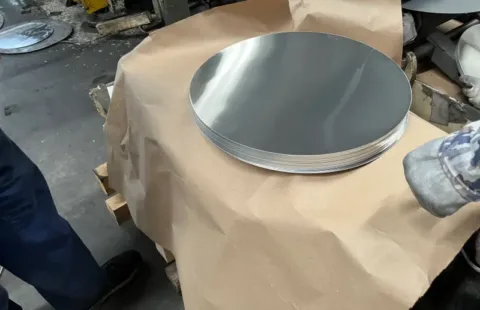
Stamped / drawn cookware uses aluminum circle blanks cut from rolled coil or sheet. The blank is pressed into shape in one or more die passes. This is the most cost-efficient route for thin-to-medium gauge pots and pans at scale.
7. What to Look For in an Aluminium Cookware Set
For buyers sourcing an aluminium cookware set — whether for retail distribution, hospitality supply, or OEM manufacturing — the following specification points matter most:
| Specification | What to Check | Why It Matters |
|---|---|---|
| Wall thickness | 2.0–4.0 mm for stamped; 4.0–8.0 mm for cast | Determines heat retention and warp resistance |
| Base alloy | 1050, 1060, 1100 (drawn); ADC12 (cast) | Affects conductivity, formability, and anodizing quality |
| Surface treatment | Hard anodized / PTFE / ceramic / polished | Determines non-stick performance and food safety |
| Base construction | Plain / impact-bonded stainless / clad | Induction compatibility requires magnetic base layer |
| Handle attachment | Riveted / welded / screw-fixed | Safety and longevity under commercial use |
| Certification | FDA, LFGB, EU 1935/2004 | Required for food-contact compliance in export markets |
8. Is Cast Aluminum Cookware Good?
The question “is cast aluminum cookware good” is common among both consumers and commercial buyers. The short answer: yes — for specific applications where thermal mass and even heat distribution matter more than weight.
Advantages of Cast Aluminum Cookware
- Superior heat retention — Thick walls (typically 4–8 mm) store and distribute heat more evenly than thin stamped pans, reducing hot spots.
- Durability — Cast bodies resist warping even under high heat cycling.
- Versatility — Cast aluminum pans move easily from stovetop to oven.
- Non-stick coating compatibility — The smooth cast surface accepts hard anodizing and PTFE coatings well.
Limitations
- Weight — Significantly heavier than stamped aluminum. Not ideal for wok cooking requiring frequent tossing.
- Cost — Die casting molds and cycle times add production cost compared to stamped alternatives.
- Porosity — Low-quality casting can introduce micro-porosity, affecting coating adhesion and structural integrity. Quality control at the alloy and casting stage is critical.
For professional food service and mid-to-premium retail segments, cast aluminum cookware justifies its cost premium. For volume-sensitive household markets, stamped aluminum remains the dominant choice.
9. Key Applications & Product Forms
Aluminium cookware material is used across a wide range of end products. As a direct aluminum material supplier, we provide the substrate at the start of the manufacturing chain.
| Product | Material Form | Alloy / Temper | Notes |
|---|---|---|---|
| Pots & saucepans (drawn) | Circle blank / sheet | 1050 / 1060 / 1100-O | Diameter 160–360 mm; gauge 1.5–3.0 mm |
| Frying pans (drawn) | Circle blank | 1100-O / 3003-O | Gauge 2.0–3.5 mm for non-stick coating base |
| Pressure cookers | Sheet / circle | 1100-O / 3003-H14 | Thicker gauge 3.0–5.0 mm for pressure resistance |
| Baking trays & molds | Sheet / coil | 3003-H14 / 8011-H14 | Good stiffness at gauge 0.5–1.5 mm |
| Cast frying pans / woks | Ingot / die-cast alloy | ADC12 / A380 | Wall thickness 4–8 mm |
| Cookware lids | Sheet / coil | 1100-H14 / 3003-H14 | Gauge 1.0–2.0 mm; stamped or spun |

10. Why Source Aluminium Cookware Material From Us?
We are a direct aluminum material manufacturer supplying circle blanks, sheet, and coil for cookware production. Our customers include cookware factories across Southeast Asia, the Middle East, South America, and Africa.
- Cookware-grade circle blanks — Cut-to-diameter aluminum circles in 1050, 1060, 1100, and 3003 alloys, temper O or H12, ready for deep drawing and spinning lines.
- Consistent gauge tolerance — Tight thickness tolerance (±0.02 mm) reduces scrap rates on high-speed press lines.
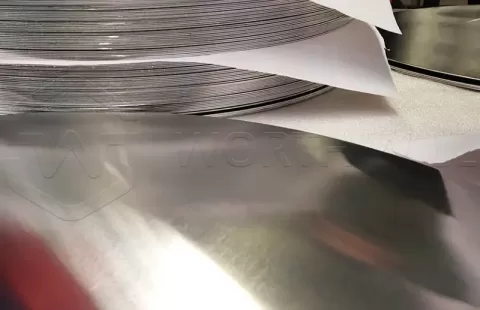
- Surface quality — Mill finish and one-side bright finish options; anodizing-ready surface quality available.
- ASTM B209 & EN 485 compliant — Full material test reports supplied with every shipment.
- Free samples — Request a sample circle blank or sheet before placing your bulk order.
- Custom dimensions — Slit, cut, or circle-blanked to your exact specification.
- Export-ready packaging — Eye-to-wall or eye-to-sky coil packing; interleaved sheet packing to prevent surface damage in transit.
Request a Quote for Aluminium Cookware Material
Tell us your required alloy, temper, circle diameter or sheet dimensions, gauge, and monthly volume — and we will respond with a competitive quotation within 24 hours.
Free samples available. ASTM B209 certified. Ships to Southeast Asia, Middle East, Africa, South America, and Europe.
11. Frequently Asked Questions (FAQ)
Q1: Is aluminium cookware safe for cooking?
Yes. Aluminium cookware is safe for cooking under normal use conditions. Hard-anodized and coated aluminum cookware provides an additional barrier between the metal and food. Major food safety authorities including WHO and the EU do not classify aluminum cookware as hazardous. Avoid prolonged cooking of highly acidic foods in uncoated aluminum pans as a general precaution.
Q2: What are the main aluminum cookware health risks?
The primary concern around aluminum cookware health risks is aluminum leaching into food, particularly with acidic ingredients in uncoated cookware. However, the amounts involved are consistently measured well below WHO acceptable intake levels. No credible scientific consensus links normal aluminum cookware use to serious health conditions.
Q3: Is aluminium cookware good for everyday use?
Yes — is aluminum cookware good for everyday cooking? Absolutely. Its fast heat-up time, even heat distribution, and light weight make it the material of choice in professional kitchens worldwide. Choose hard-anodized or coated versions for the best combination of performance and surface durability.
Q4: What is aluminium cookware free of?
“Cookware aluminum free” is a common search by consumers looking for cookware without aluminum. If you are looking for non-aluminum alternatives, stainless steel, cast iron, and all-ceramic are the main options — each with trade-offs in weight, conductivity, and cost. However, hard-anodized aluminum cookware is a middle-ground choice: aluminum substrate for heat performance, with a non-reactive anodized surface that does not transfer aluminum to food under normal use.
Q5: Which alloy is best for aluminium cookware manufacturing?
For deep-drawn pots and pans: 1050, 1060, or 1100-O (highest formability and thermal conductivity). For baking trays and stiffer applications: 3003-H14 (better strength). For cast frying pans and woks: ADC12 or A380 die-cast alloys.
Q6: Can aluminium cookware be used on induction hobs?
Standard aluminum is not magnetic and will not work on induction hobs. However, aluminium cookware sets designed for induction have an impact-bonded or clad stainless steel base plate that provides the magnetic response needed. When sourcing aluminum material for induction-compatible cookware, specify the need for a clad-base construction at the product design stage.
Q7: What is the minimum order quantity for cookware aluminum circle blanks?
Our standard MOQ is 1 metric ton per specification (alloy, temper, diameter, gauge). Mixed-diameter orders within the same alloy and temper may be combined to reach MOQ. Contact us for details on your specific requirements.
Q8: Do you supply aluminum sheet for baking tray manufacturing?
Yes. We supply 3003-H14 and 8011-H14 aluminum sheet and coil specifically used in baking tray and food container manufacturing. Gauge range: 0.4 mm – 3.0 mm. Width up to 2,000 mm. LFGB and FDA-compliant material available on request.